
Category 05 · Topical retinoids
Retinol, retinaldehyde, and adapalene compared
Vitamin A derivatives share a family name, not identical evidence. Molecule, conversion pathway, concentration, stability, vehicle, and regulatory status all change what a label can reasonably tell you.
3 selected formula profiles, compared without a universal ranking.
Retinoic acid is the receptor-active form. Cosmetic retinol and retinaldehyde require conversion steps in skin, while adapalene is a retinoid drug with a defined acne indication and Drug Facts labeling. Results from one molecule should not be transferred automatically to another.
Percentage is meaningful only within context. A disclosed retinaldehyde percentage cannot be compared numerically with an undisclosed retinol formula or 0.1% adapalene as though the numbers occupy one strength scale. Stability, packaging, delivery, and study design also matter.
These three products represent three distinct decision paths: an over-the-counter acne drug, a cosmetic retinol with undisclosed strength, and a cosmetic retinaldehyde with disclosed strength. They are not ranked from weakest to strongest.
Selection criteria
What to compare first
Front-label language can narrow a search, but formulation, directions, and individual context determine whether the product is a sensible fit.
Identify the molecule
Retinol, retinaldehyde, adapalene, and tretinoin are related but distinct. Begin with the exact ingredient rather than the broad word retinoid.
Match evidence to the goal
A drug indication for acne and cosmetic evidence for appearance concerns answer different questions. Do not borrow claims across them.
Inspect strength and packaging
Concentration disclosure, opaque or air-limiting packaging, storage directions, and expiration all contribute to a meaningful comparison.
Plan around irritation
Dryness, peeling, and stinging are common barriers. A gradual, simple routine may be more sustainable than starting several actives together.
Product comparison
Three profiles, three sets of tradeoffs
These are selected examples, not numerical rankings. Verify the current package because ingredients, directions, and claims can change.
| Product | Formula profile | May align with | Important limit |
|---|---|---|---|
| DifferinAdapalene Gel 0.1% Acne Treatment, 45 g Pump | Over-the-counter acne drug with 0.1% adapalene | Someone seeking a defined retinoid drug for its labeled acne indication | It should be used according to Drug Facts; drug evidence for adapalene does not transfer to cosmetic retinol or retinaldehyde. |
| CeraVeResurfacing Retinol Serum | Fragrance-free cosmetic serum that identifies retinol | A cosmetic retinol route where fragrance-free positioning is a priority | The retinol percentage is not disclosed, so precise strength comparisons and drug-equivalence claims are not supportable. |
| NaturiumRetinaldehyde Cream Serum 0.05%, 1.7 fl oz | Cosmetic cream serum with 0.05% retinaldehyde | Someone who wants a named cosmetic retinoid with a disclosed concentration | Disclosed retinaldehyde concentration does not make its evidence interchangeable with adapalene or prescription tretinoin. |
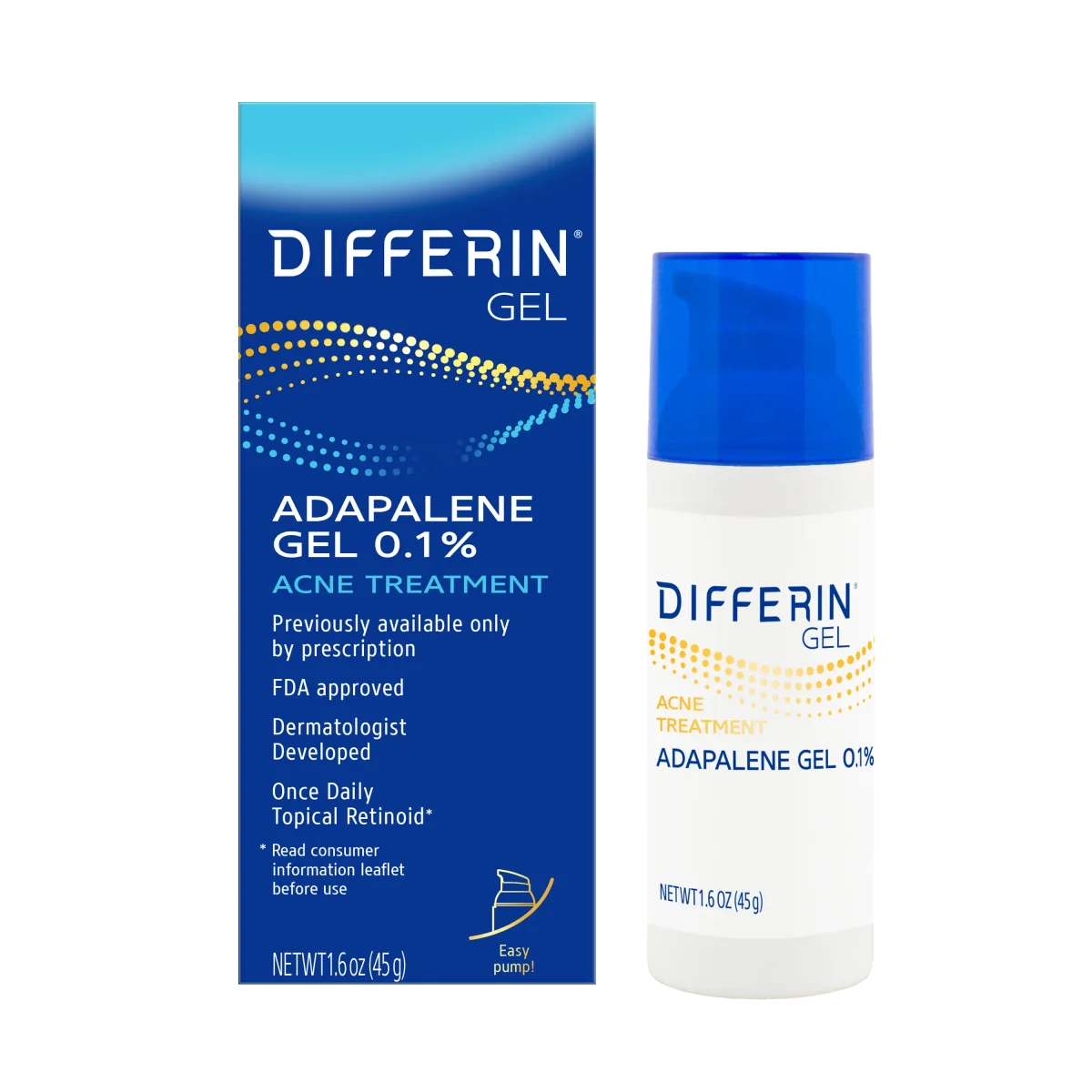
Differin
Adapalene Gel 0.1% Acne Treatment, 45 g Pump
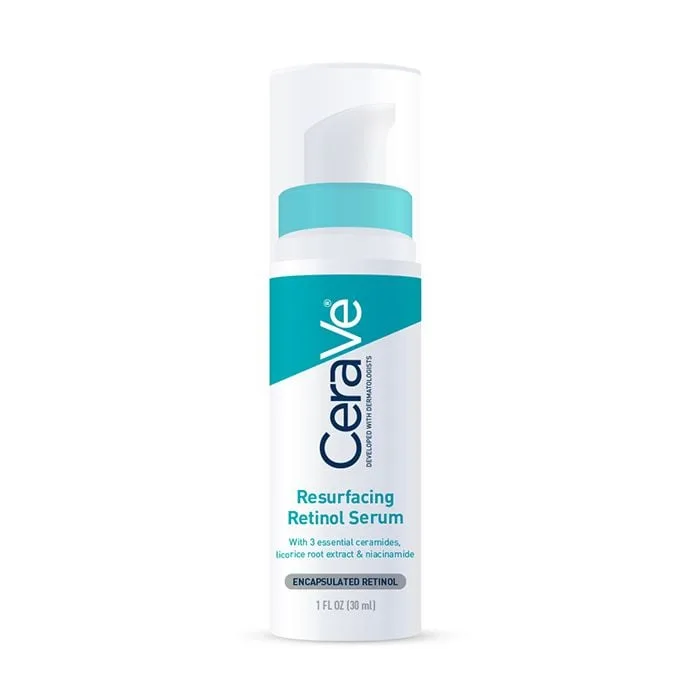
CeraVe
Resurfacing Retinol Serum
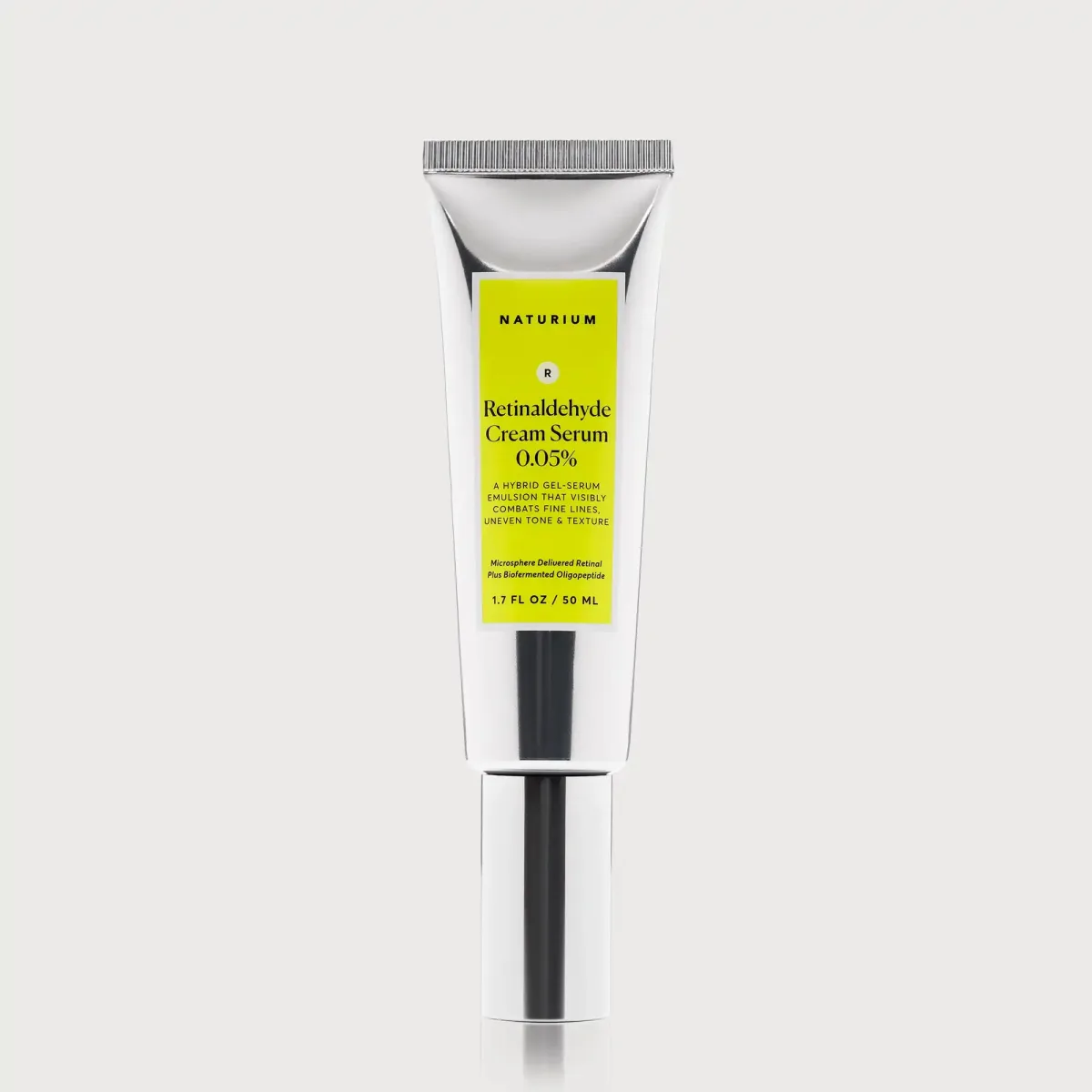
Naturium
Retinaldehyde Cream Serum 0.05%, 1.7 fl oz
Formulation context
What the front label leaves out
- 01
Conversion steps help explain chemical relationships, but they do not create a reliable consumer formula for translating one retinoid percentage into another.
- 02
Light and oxygen can degrade some retinoids. Packaging and storage are part of the formula assessment rather than cosmetic details.
- 03
Buffering with moisturizer may improve comfort for some routines, but product directions and clinician instructions take precedence.
- 04
Daily photoprotection is important because irritation and ultraviolet exposure can complicate a retinoid routine.
Decision path
Turn the comparison into a controlled choice
A simpler routine makes both benefit and irritation easier to interpret.
Define the intended outcome
Separate treatment of acne from a cosmetic goal involving texture or visible photoaging; the relevant evidence and product category may differ.
Choose one retinoid path
Select the molecule and product type deliberately instead of layering multiple vitamin A derivatives.
Introduce conservatively
Follow the current label, simplify competing actives, support the barrier, and reassess if irritation persists rather than pushing through injury.
Limits and safety
Know when product comparison is not enough
- Do not use retinoids during pregnancy. If trying to conceive or breastfeeding, ask a qualified clinician before use.
- Persistent burning, swelling, blistering, or severe peeling is not a routine adjustment period and warrants stopping the product and seeking guidance.
- Prescription retinoid instructions and clinician advice take precedence over general cosmetic education.
Method and revision
Transparent by design
Published · Updated . Products were compared using current label and manufacturer information, category-level evidence, and explicitly stated uncertainties. No firsthand testing is claimed.
Educational information only; it is not a diagnosis or personalized treatment plan. Some outbound product links are sponsored, but sponsorship does not determine inclusion or alter the assessment.