
Category 02 · Facial moisturizers
How to choose a facial moisturizer
Moisturizers are delivery systems built from water-binding, smoothing, and evaporation-reducing ingredients. The best profile is the one that supplies enough support in a texture you will use consistently.
3 selected formula profiles, compared without a universal ranking.
The outermost skin layers limit water loss and help resist irritants. A moisturizer can improve dryness and comfort by combining humectants that bind water, emollients that smooth spaces between surface cells, and occlusive ingredients that reduce evaporation.
Ingredient families do not work in isolation. Glycerin, ceramides, squalane, hyaluronic acid, niacinamide, and dimethicone may each contribute something different, but the vehicle, concentration, climate, application amount, and condition of the skin determine how the finished product feels and performs.
These examples all fit a fragrance-free facial-moisturizer brief. They are compared by formula architecture and stated limitations, not presented as a single best moisturizer for everyone.
Selection criteria
What to compare first
Front-label language can narrow a search, but formulation, directions, and individual context determine whether the product is a sensible fit.
Start with dryness severity
Very dry or compromised skin often needs more evaporation control than mildly dehydrated or oil-prone skin. Texture preference must be balanced against that need.
Look for complementary roles
A useful formula commonly combines a humectant with emollient or occlusive support instead of relying on one fashionable ingredient.
Account for the environment
Cold, wind, indoor heating, low humidity, and frequent washing can increase the level of support a routine requires.
Separate moisturizer from sunscreen
None of these three products contains SPF. A separate broad-spectrum sunscreen remains necessary for daytime photoprotection.
Product comparison
Three profiles, three sets of tradeoffs
These are selected examples, not numerical rankings. Verify the current package because ingredients, directions, and claims can change.
| Product | Formula profile | May align with | Important limit |
|---|---|---|---|
| CeraVePM Facial Moisturizing Lotion | Glycerin, ceramides, niacinamide, and dimethicone in a fragrance-free facial lotion | A routine seeking humectant, barrier-lipid, and film-forming ingredients in one leave-on step | It has no sunscreen, and the ingredient list alone cannot predict texture preference or individual tolerance. |
| VanicreamDaily Facial Moisturizer | Glycerin, squalane, hyaluronic acid, and ceramides in a fragrance-free formula | Someone comparing water-binding ingredients with emollient and barrier-lipid support | It has no SPF; highlighted ingredients do not reveal their concentration or guarantee adequate occlusion for very dry skin. |
| La Roche-PosayToleriane Double Repair Face Moisturizer | Glycerin, squalane, dimethicone, niacinamide, and ceramide NP | A routine seeking both humectant and film-forming support with niacinamide | Manufacturer hydration-duration claims are not independent evidence and should not determine the choice by themselves. |
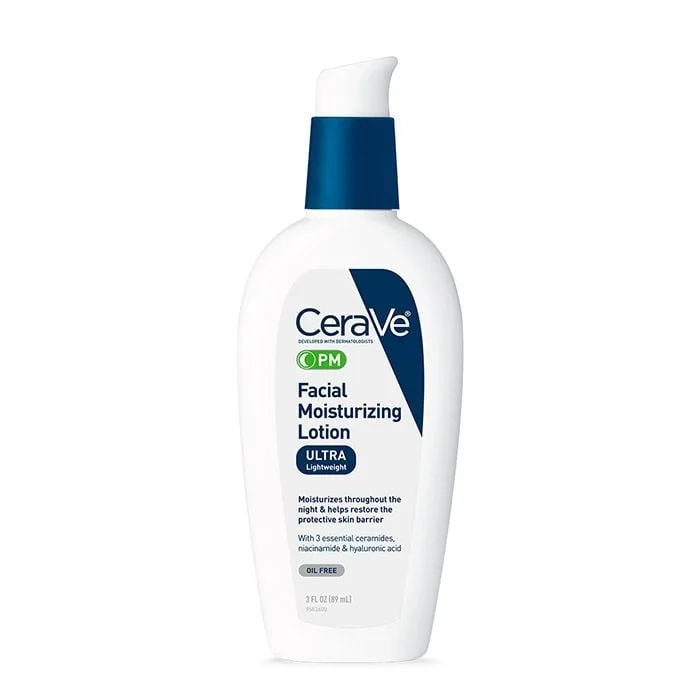
CeraVe
PM Facial Moisturizing Lotion
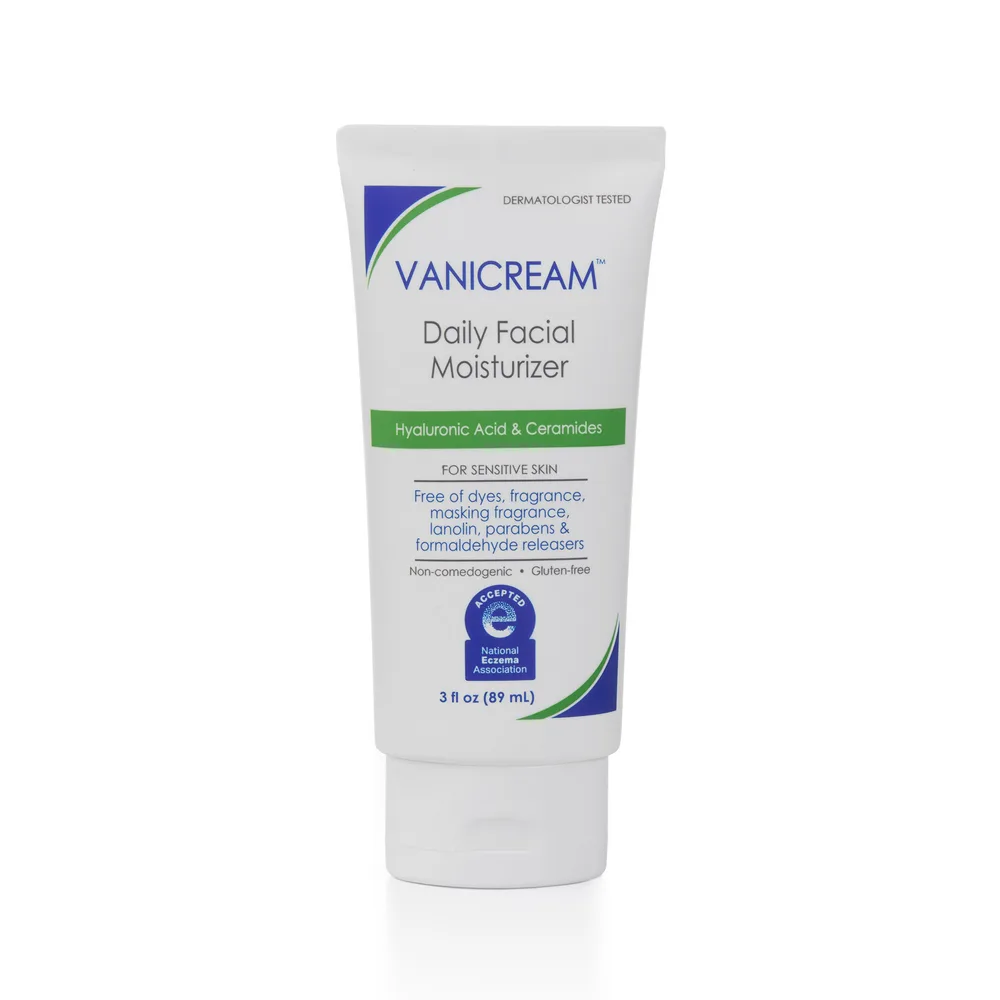
Vanicream
Daily Facial Moisturizer
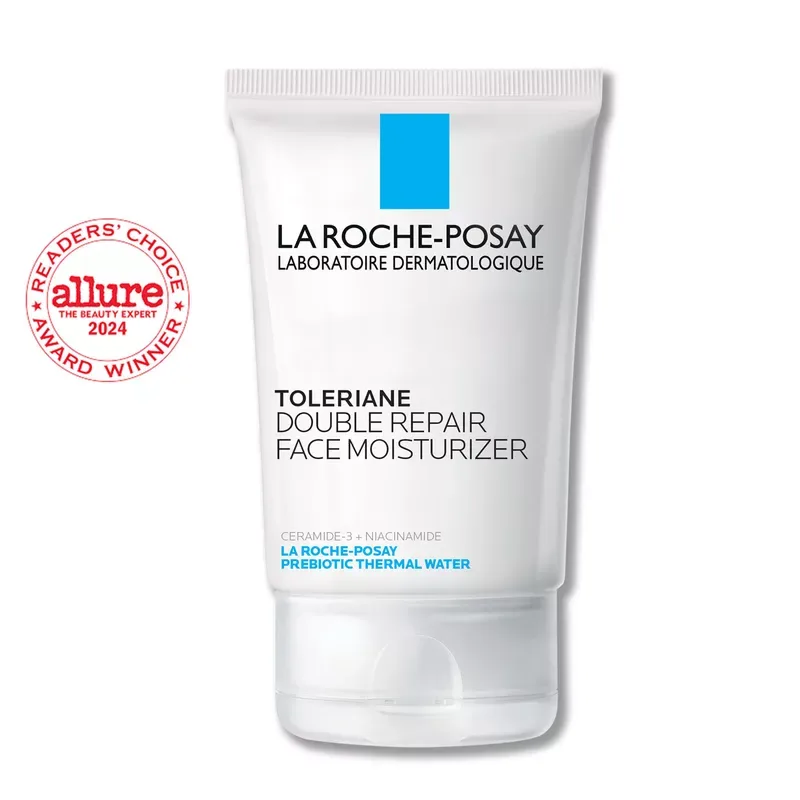
La Roche-Posay
Toleriane Double Repair Face Moisturizer
Formulation context
What the front label leaves out
- 01
Humectants bind water, but a humectant-heavy formula may still need an occlusive layer when the environment is very dry.
- 02
Dimethicone and other film formers can reduce water loss without necessarily producing the feel of a heavy ointment; the complete vehicle determines finish.
- 03
Ceramide on a label does not disclose the amount, delivery, or lipid ratio. Treat it as one relevant clue rather than a guarantee of barrier repair.
- 04
Niacinamide is multifunctional and widely used, but more ingredients are not always preferable for a person trying to identify the source of sensitivity.
Decision path
Turn the comparison into a controlled choice
A simpler routine makes both benefit and irritation easier to interpret.
Choose a support level
Use current dryness, climate, and cleansing or treatment intensity to decide whether a light lotion is likely to be enough.
Compare roles, not ingredient counts
Look for a coherent mix of water-binding and evaporation-reducing ingredients rather than the longest list of highlighted actives.
Observe through a stable routine
Give a tolerated formula a consistent trial while keeping other changes limited, then reassess comfort, flaking, and daytime wear.
Limits and safety
Know when product comparison is not enough
- Natural origin, hypoallergenic language, and dermatologist-tested claims do not establish zero allergy or irritation risk.
- Acne-prone skin can still need moisturization, but no front-label term guarantees that a product will not contribute to breakouts for a particular person.
- Persistent cracking, oozing, severe itch, or a spreading rash warrants professional evaluation rather than continued product experimentation.
Method and revision
Transparent by design
Published · Updated . Products were compared using current label and manufacturer information, category-level evidence, and explicitly stated uncertainties. No firsthand testing is claimed.
Educational information only; it is not a diagnosis or personalized treatment plan. Some outbound product links are sponsored, but sponsorship does not determine inclusion or alter the assessment.