
Category 01 · Facial cleansers
How to choose a facial cleanser
A useful cleanser removes the day’s residue without creating more barrier disruption than the routine requires. These three examples illustrate different ways a gentle-cleansing brief can be formulated.
3 selected formula profiles, compared without a universal ranking.
Cleansers rely on surfactants: molecules with water-compatible and oil-compatible regions that help oily material disperse into rinse water. The useful question is not whether a cleanser contains surfactants, but whether its complete surfactant system removes your sunscreen, makeup, oil, and debris without leaving persistent tightness or irritation.
Foam is an imperfect shortcut. A high-lather wash is not automatically more effective, and a low-lather formula is not automatically gentler. Concentration, surfactant blend, pH, contact time, water temperature, and cleansing frequency all influence the result.
The products below are selected examples rather than a universal ranking. Their labels and manufacturer information establish category fit; only repeated use on your skin can establish personal tolerance.
Selection criteria
What to compare first
Front-label language can narrow a search, but formulation, directions, and individual context determine whether the product is a sensible fit.
Match the removal load
A light morning cleanse, a water-resistant sunscreen, and long-wear makeup create different removal demands. Choose for the hardest material you regularly need to remove.
Assess the whole surfactant system
Do not judge cleansing power or gentleness from foam level or one highlighted ingredient. The blended formula and the way it rinses matter more.
Notice the post-rinse response
Persistent tightness, burning, scaling, or redness suggests that the product, frequency, water temperature, or contact time may be too aggressive.
Read claims precisely
Fragrance-free is not the same as unscented, and sensitive-skin positioning is not a guarantee that an individual will avoid irritation.
Product comparison
Three profiles, three sets of tradeoffs
These are selected examples, not numerical rankings. Verify the current package because ingredients, directions, and claims can change.
| Product | Formula profile | May align with | Important limit |
|---|---|---|---|
| CeraVeHydrating Facial Cleanser | Hydrating cleanser with glycerin, ceramides, and hyaluronic acid | Normal-to-dry skin seeking a fragrance-free daily cleanser | The presence of barrier-associated ingredients in a rinse-off product does not prove barrier repair or universal gentleness. |
| VanicreamGentle Facial Cleanser | Fragrance-free, soap-free, pH-balanced cleanser | A routine that prioritizes straightforward sensitive-skin positioning | A pH-balanced or sensitive-skin claim cannot predict personal tolerance or makeup-removal performance. |
| La Roche-PosayToleriane Hydrating Gentle Facial Cleanser | Hydrating cleanser with glycerin, ceramide-3, and niacinamide | Normal-to-dry sensitive skin seeking cleansing plus a conditioning ingredient profile | Niacinamide and ceramide callouts describe the formula; they do not make a rinse-off cleanser equivalent to leave-on treatment. |
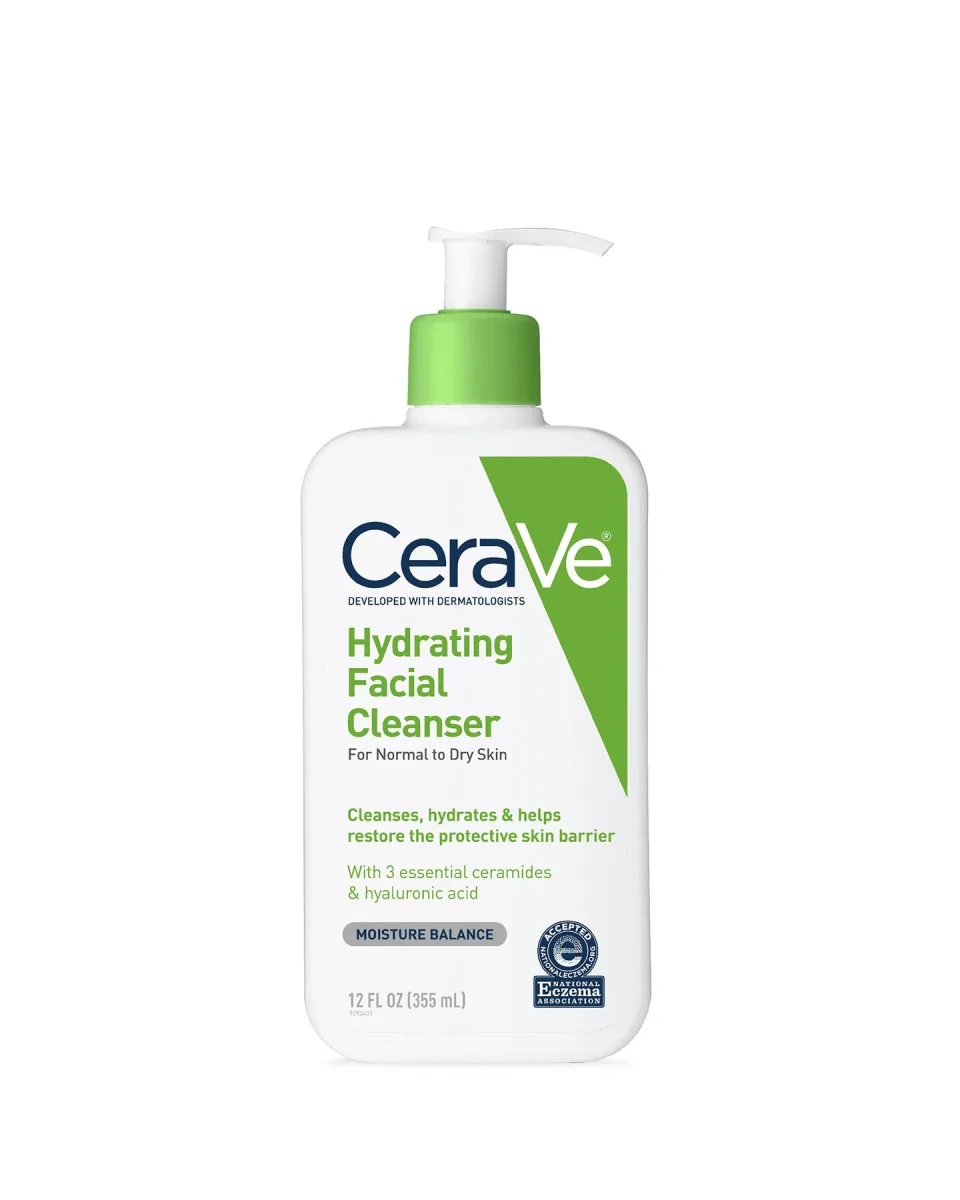
CeraVe
Hydrating Facial Cleanser
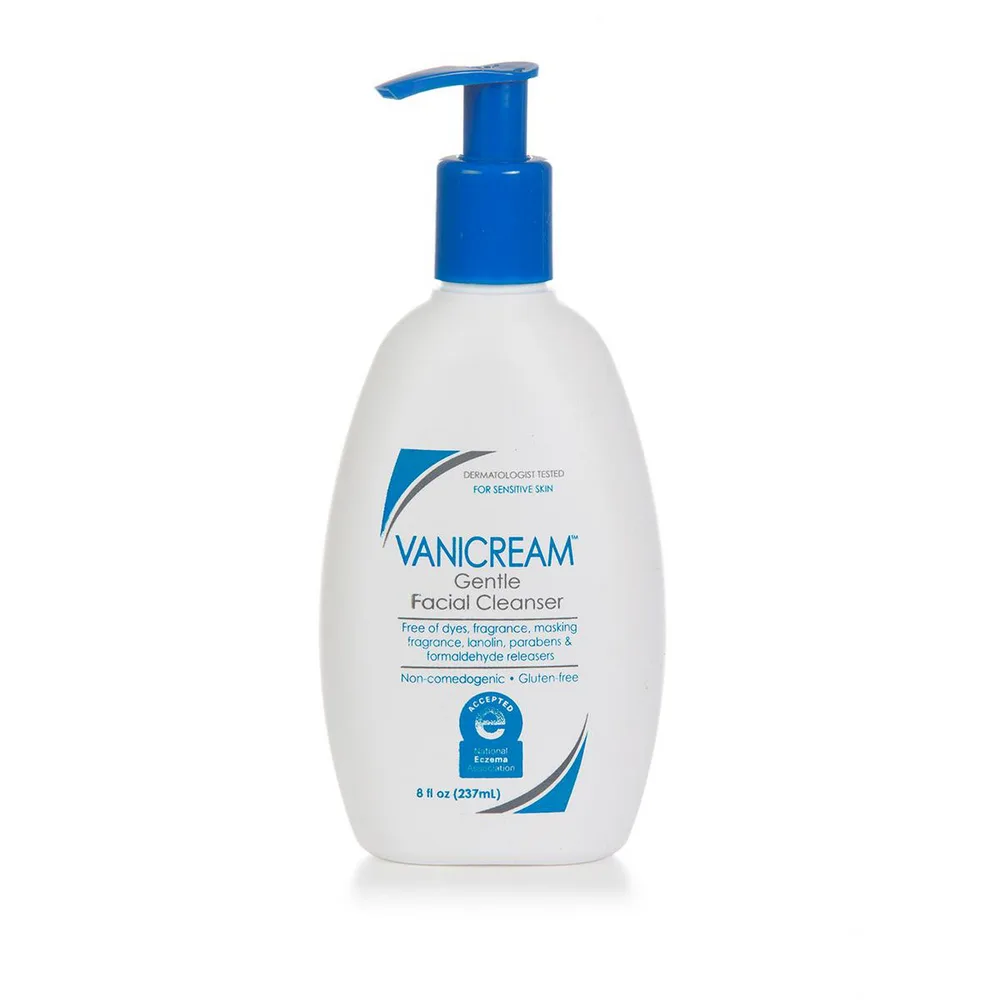
Vanicream
Gentle Facial Cleanser
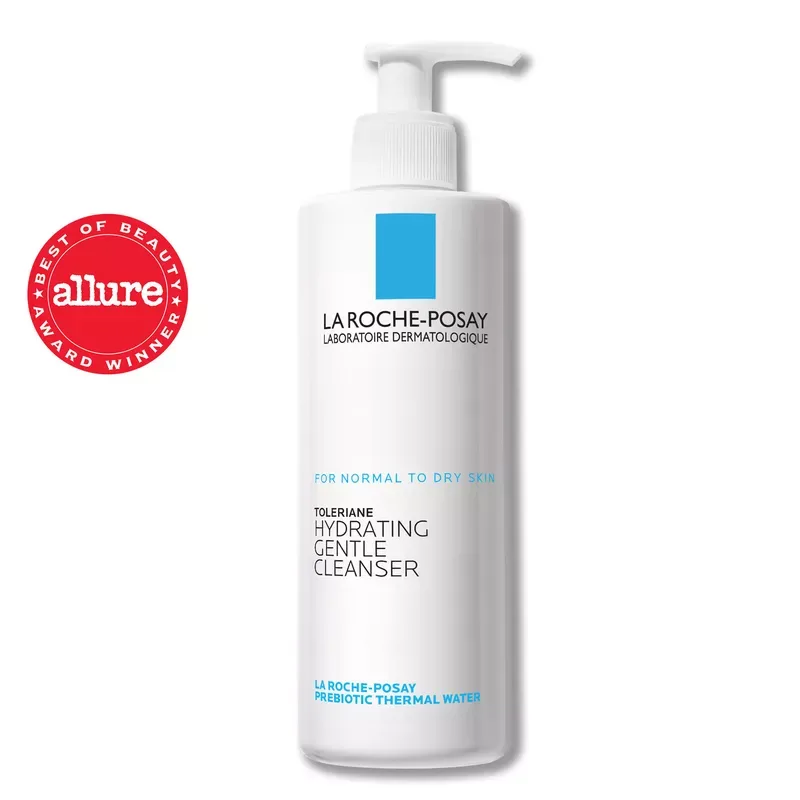
La Roche-Posay
Toleriane Hydrating Gentle Facial Cleanser
Formulation context
What the front label leaves out
- 01
Surfactant names are difficult to interpret one at a time. Mildness emerges from the blend, concentration, vehicle, and use conditions.
- 02
Glycerin and similar humectants can support a more comfortable cleansing experience, but rinse-off exposure is different from leave-on moisturization.
- 03
Ceramides and hyaluronic acid may be useful formulation features, yet their presence does not cancel an unsuitable surfactant system or overly frequent washing.
- 04
If one cleanse does not remove a durable sunscreen or makeup, a compatible first cleansing step may be preferable to repeated scrubbing with the same wash.
Decision path
Turn the comparison into a controlled choice
A simpler routine makes both benefit and irritation easier to interpret.
Define the job
List what the cleanser must reliably remove and whether it is intended for morning, evening, or both.
Choose the least aggressive reliable option
Start with the formula profile that meets the removal job without relying on squeaky-clean after-feel as proof of effectiveness.
Change one variable at a time
If skin feels persistently tight or irritated, adjust frequency, water temperature, contact time, or product rather than adding several corrective products at once.
Limits and safety
Know when product comparison is not enough
- Stop using a cleanser that causes persistent burning, cracking, swelling, or rash.
- Cleansing more often does not necessarily improve acne and can make an already irritating routine harder to tolerate.
- A cosmetic cleanser cannot diagnose or treat eczema, rosacea, allergic contact dermatitis, or another medical condition.
Method and revision
Transparent by design
Published · Updated . Products were compared using current label and manufacturer information, category-level evidence, and explicitly stated uncertainties. No firsthand testing is claimed.
Educational information only; it is not a diagnosis or personalized treatment plan. Some outbound product links are sponsored, but sponsorship does not determine inclusion or alter the assessment.